
A Day in the Dark; Cuba’s Humanitarian Crisis
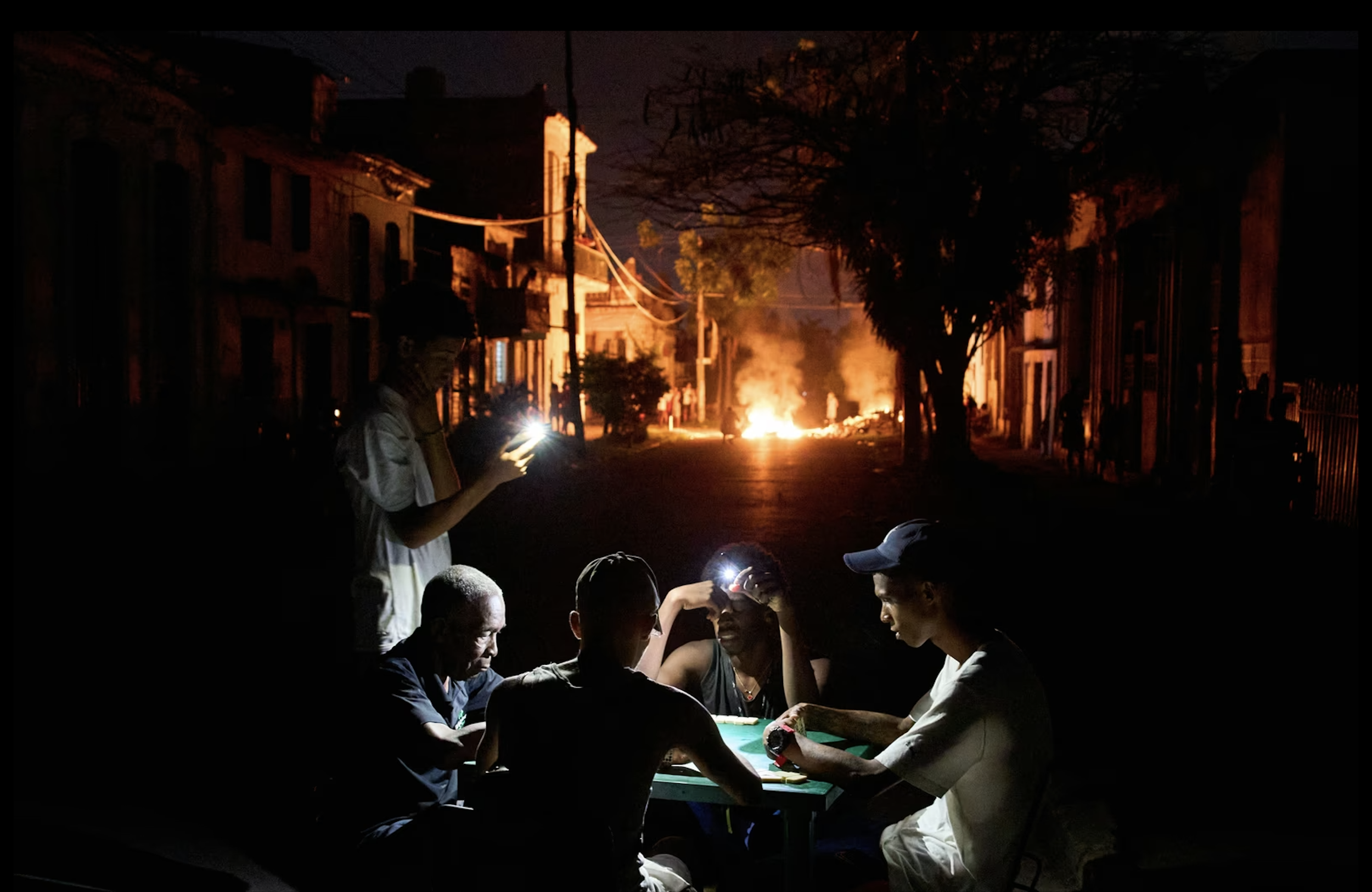
Ramon Espinosa / AP
*This is a reconstruction based on reported experiences of Cubans during the 2026 humanitarian crisis: it does not represent the literal schedule of one individual. Data points and quotes have been collected from The New York Times.
3:00 - 5:00 a.m.
The electricity returns sometime before dawn. It is not a reason to sleep and enjoy the limited time with the electric fan; it is the sole reason to wake up.
Across Cuba, families who have spent hours in darkness have rushed to do whatever they can in the small window they are granted. The brief return of electricity provides an opportunity to do anything that requires power: charge a phone, wash clothes, cook, and so much more. One neighbor told The New York Times, “Night has become day.” Citizens are forced to live a nocturnal lifestyle, one usually lived by owls and other creatures of the night, because every minute of electricity can carry themselves and their family through another day.
7:00 a.m.
By morning, the streets begin to fill, but not with buses and cars, with people. Fuel shortages have crippled transportation across many regions of the island, forcing people to hitchhike along the sides of the road. These small migrations, made daily by the Cubans, are born out of sheer necessity to gain access to food, gas, or even a hospital. Some journeys have been reported to last a few hours.
Students getting to class can become a question of transportation, rather than whether they finished their homework or studied for an exam. Ultimately, reaching a destination has not become guaranteed, but rather another obstacle faced by all.
8:00 a.m.
For those who make it to school, the day may already be shorter than it once was. The country began adjusting school schedules, cutting classes down to half-days to conserve scarce fuel. Others can resort to online school, however, a student can extend their reach for their laptop to be met with another obstacle. There may be no electricity to charge it, and the family may not be able to afford the data needed to connect. The crisis has turned education into another part of daily life that must be adapted around shortages.
1:00 p.m.
By early afternoon, the heat settles over the island, and vendors begin appearing in the streets. Food is no longer something families can simply assume will be available; it is something that is stretched, protected, and rationed. The bodega, Cuba’s state-run system that once guaranteed basic food staples at low prices, has faltered as the government has struggled to afford food imports. Leaving many families between a common choice, the bread and rice which has been rationed for a few days or whatever they can afford from street vendors. Others have turned to firewood and charcoal to cook when electricity is unavailable.
4:00 p.m.
By mid-afternoon, the divide between Cubans who can find their own source of electricity and those who cannot became harder to ignore. Families who can afford them have turned to solar panels and lithium batteries. Scattered among roofs, neighbors come together to transport and install them. One roadside restaurant employee, Yeny Oliva, described the difference bluntly. “The situation here is fine, because the owner can afford to buy solar panels. But for us, at home, life is awful.” Some of the most popular lithium batteries cost around $750 in Cuba, more than many Cubans earn in a single year. In that case, many of the batteries and panels are purchased with money sent by relatives living abroad.
8:00 p.m.
For a few hours, electricity can shift from a necessity, to an opportunity to forget about the crisis. In Havana, one man uses his lithium battery to power a small neighborhood gathering. It's a chance for people to listen to music, socialize, and allow artists to showcase their talents. The party is modest, but its existence demonstrates something about the way Cubans have responded to their new reality. Amidst all, Humberto Palmero, a 55-year-old farmer, states that “Cubans thrive amid crisis.”
11:00 p.m.
By late night, the celebration has faded, the lithium battery which hosted the party has been shut off, and the dark abyss returns. Without reliable air conditioning or fans, the heat makes sleep difficult. Some residents have chosen to sleep on cardboard placed over concrete because the surface remains much cooler than a mattress. While outside, trash accumulates, transportation remains limited, and medicine is increasingly difficult to acquire. Tomorrow's electricity is already a question: maybe it will return at 3 a.m., maybe at 5, or maybe not at all.
While this isn’t the story of a single person, it's a collection of growing struggles of millions across Cuba. In January, the Trump Administration began restricting the flow of oil to the island. Many major suppliers such as Russia, China, Mexico, and Venezuela have been threatened with the implementation of tariffs if they supplied the country. By March, a single Russian oil tanker was allowed to dock at the island. More recently, Secretary of State Marco Rubio announced a $100 million humanitarian aid package for the Cuban people. Whether that aid can keep up with the country’s worsening shortages remains uncertain. For now, Cubans continue to adapt to a crisis that has made daily life unpredictable.