
ICE Presence at the Milan-Cortina Olympics
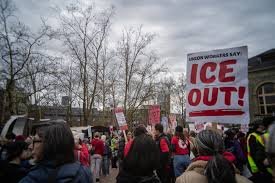
As we prepare for the Milan-Cortina 2026 Winter Olympics, it was reported that agents from the U.S. Immigration and Customs Enforcement, better known as ICE, will be present. It has sparked debate and concern within Italy and worldwide. The situation has created questions about security and the role of foreign agencies at the Olympics and other global events.
According to officials from Italy and the U.S, the ICE personnel involved are connected to Homeland Security Investigations, a branch of the U.S Department of Homeland Security that focuses on international crime, rather than immigration enforcement. The US Department of Homeland Security, covered by CBS News, said that its role is strictly supportive, working with the US diplomatic security and Italian authorities, assess risks for “transnational crime”. Italian officials also stated that ICE agents will not manage the security operations of the event, and that all Olympic security will be controlled by Italian authorities.
Despite these explanations, Italian leaders strongly criticized the decision. Milan’s mayor, Giuseppe Sala, called ICE “a militia that kills, and said that they are “not welcome” in the city, as stated on CBS news. He also argued that the agency’s image creates political problems, saying that “ICE’s image is terrible” and according to the Sport Business Journal, many residents will be unhappy with its presence. Additionally, Time magazine covered that other big political figures, including the former Prime Minister, Guiseppe Conte, also questioned whether the involvement of ICE fits with democratic values and Italy’s independence and security decisions.
On the other hand, some officials even defended ICE. Italy’s foreign minister, Antonio Tajani, explained that ICE agents are not coming to patrol the streets, but rather “collaborate in the operations room.” Time magazine also stated that American agencies have helped with security in past international events, like previous Olympic games and arguing that such cooperation is common when countries host large global gatherings, like the Olympics.
The controversy has also been fueled by confusion about ICE’s actual role. Early Reuters reports suggested that the agency might play a major role, but later clarifications showed that its involvement is limited to supporting the U.S delegation and sharing intelligence. Italian authorities confirmed that Ice agents will not operate independently on Italian soil and will mainly work through diplomatic channels.
The Milan-Cortina Olympics are expected to bring millions of visitors and thousands of athletes from all around the world, making security planning extremely complex. Large international events often need cooperation between multiple countries to address risks like terrorism, organized crime, and cyber threats. However, the debate over ICE shows how political and social issues can influence how people look at security measures.
Overall, the situation highlights a tension between safety and public trust. While U.S officials describe ICE’s role as limited and technical, other critics focus on symbolism and human rights concerns. Italian authorities continue to say that they will remain fully in control of Olympic security. As the games approach, the discussion reflects broader questions about international cooperation and how the government balances security with public opinion during major global events.